
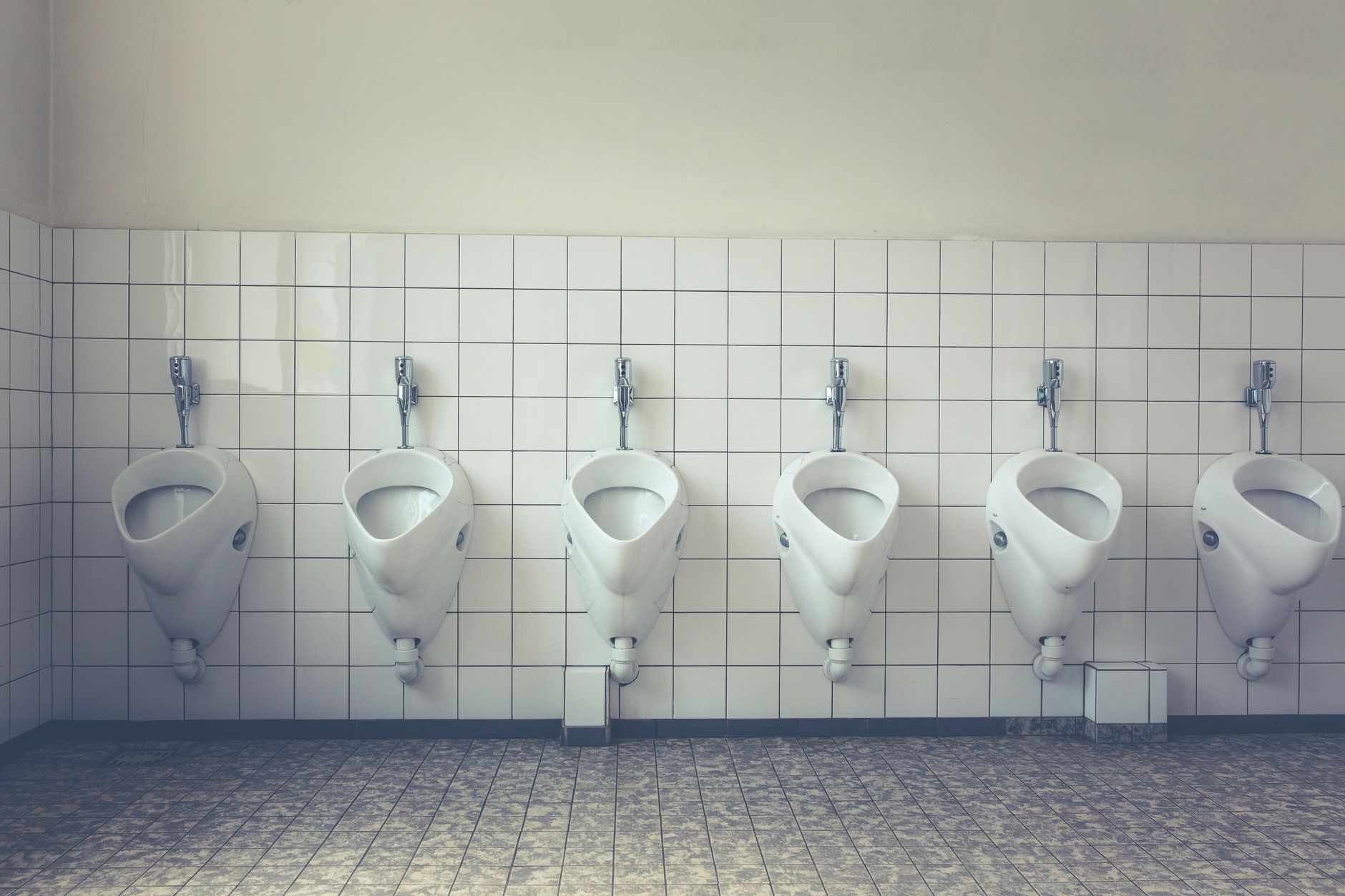
Commercial bathroom and amenities areas sit at the intersection of heavy foot traffic, constant moisture and strict hygiene expectations. A finish that works perfectly on a boardroom wall will fail in a commercial bathroom within months. Steam, condensation, chemical cleaning products and near-daily scrubbing will defeat any paint that wasn't selected with this environment in mind. Apex Painting handles these spaces regularly across Melbourne, and the mistakes we see are almost always about product selection and surface preparation.
Why commercial bathrooms are different from residential ones
A domestic bathroom sees one or two showers a day. A commercial amenities block in an office building or retail centre might cycle through dozens of users every hour. The humidity doesn't fully clear between uses. Cleaning staff apply industrial-strength disinfectants and degreasers to walls, partitions and floors several times a day. Ventilation is often inadequate because the exhaust fans are sized for occupancy loads that real usage exceeds.
These conditions mean standard interior paint fails fast. The film softens under sustained moisture, losing adhesion at the substrate. Cleaning chemicals strip sheen levels that weren't formulated to resist them. Mould establishes itself in grout lines and low-sheen paint surfaces. The result is a facility that looks neglected within a year of being repainted, regardless of how good the paint colour was.
Surface preparation: the work that decides everything
No product performs well over a compromised substrate. In commercial bathrooms, the most common substrate problems are residual moisture in the walls, failed waterproofing behind tiles that has wicked through to adjacent painted surfaces, paint film that has lost adhesion from previous cycles of cleaning, and mould that's been painted over rather than treated.
Apex Painting follows a fixed sequence on these jobs. First, all existing loose, flaking or blistering paint is removed by hand scraping and sanding. Second, any visible mould is treated with a dedicated biocide wash, not just bleach. Bleach kills surface mould but doesn't penetrate the substrate; a proper biocide does. Third, the substrate is allowed to dry fully before any primer goes down. In facilities with poor ventilation, this can take longer than expected, and rushing it is the single most common cause of early paint failure in commercial amenities areas.
Plaster and masonry surfaces need a moisture-tolerant primer applied before the topcoat. Bare concrete block, which appears in many older Melbourne commercial buildings, needs a block filler to close the surface before any finish coat is applied.
Product selection for amenities areas
For walls in commercial bathrooms, Apex Painting specifies a semi-gloss or gloss acrylic that carries a mould-resistant additive and is rated for wet areas. The sheen level matters for two reasons: higher sheen resists moisture penetration better, and it allows the wall to be wiped down without the paint film softening or burnishing. A flat or low-sheen finish in a commercial bathroom is the wrong choice regardless of how the space is designed.
For ceilings, the challenge is different. Steam rises and condensation collects on ceiling surfaces that are often cooler than the surrounding air. A ceiling-grade acrylic with a built-in mould inhibitor, applied at the correct film thickness, is the minimum spec. Thin application is a false economy: each coat below the specified film thickness reduces the product's moisture resistance and shortens its service life.
Floors in amenities areas are a separate category. Painted concrete floors in these spaces need an epoxy coating rather than a conventional floor paint. Painting concrete floors in commercial spaces demands proper etching and priming before any epoxy system goes down; skip those steps and the coating will delaminate within weeks of exposure to water and cleaning chemicals.
Ventilation and drying conditions during the job
Painting a commercial bathroom while the facility is partially in use is a real scheduling problem. Apex Painting plans amenities repaints for the lowest-traffic window available, typically a weekend or after hours, and brings in temporary ventilation equipment when the building's own exhaust fans aren't sufficient. Paint applied in a poorly ventilated bathroom cures more slowly, stays tacky longer, and picks up contamination from airborne moisture before the film has set.
This is the same problem that drives planning decisions in other occupied spaces. The product choices and scheduling logic we apply to managing paint odour in occupied commercial spaces apply directly here: low-VOC products, strong air movement and clear communication with building management about which areas are off-limits during curing.
Managing the transition zones
One detail that's easy to miss is the transition between the wet area and the adjoining corridor or change room. These transition zones are where different paint systems meet, and if they're not handled carefully, you get a visible seam, inconsistent sheen and an edge that allows moisture to track from the wet zone into the dry wall system.
Apex Painting treats the transition zone as part of the wet area specification, extending the wet-area product at least 300 millimetres past the door frame into any adjoining space. The finish level is then feathered to meet the corridor product without a hard line. It's a small detail, but it prevents the moisture ingress that causes paint failure right at the doorway, which is also one of the highest-touch surfaces in any commercial facility.
Sheen consistency and touch-up planning
Commercial bathrooms need touch-up painting more frequently than almost any other internal space. Scuffs from cleaning trolleys, chips from door handles and water damage marks from a leaking tap fitting all require spot repairs. The challenge is that high-sheen paint is notoriously difficult to touch up without the patch showing. The batch number, application method and time elapsed since the original coat all affect how well the touch-up blends.
Apex Painting records the exact product code, batch number and sheen specification for every commercial bathroom we paint, and we hand that information to the building manager at handover. It makes future touch-up work straightforward and avoids the mismatched-sheen problem that plagues facilities where no paint records were kept. The same discipline applies to any commercial job: without records, even a perfect colour match will look wrong at a different sheen level.
The broader logic of managing touch-up work in live facilities is covered in detail in our guide on handling paint touch-ups in occupied commercial spaces. The colour-match and sheen-match principles that apply to offices and corridors apply just as much here, with the added complication of moisture affecting how the touch-up dries.
How long a properly specified job should last
A commercial bathroom painted to the correct specification, with proper surface preparation and a wet-area acrylic at the right film thickness, should hold for 4 to 6 years before a full repaint is needed. Ceilings, which face the most condensation, tend to need attention first. Walls near fixtures and door frames are the next failure points. A properly kept record of the original specification makes the maintenance cycle far easier to manage and budget for.
Facilities that skip the prep or use the wrong product often need repainting within 18 months. Over a 10-year asset cycle, the cost of doing it wrong twice is consistently higher than doing it right once.