
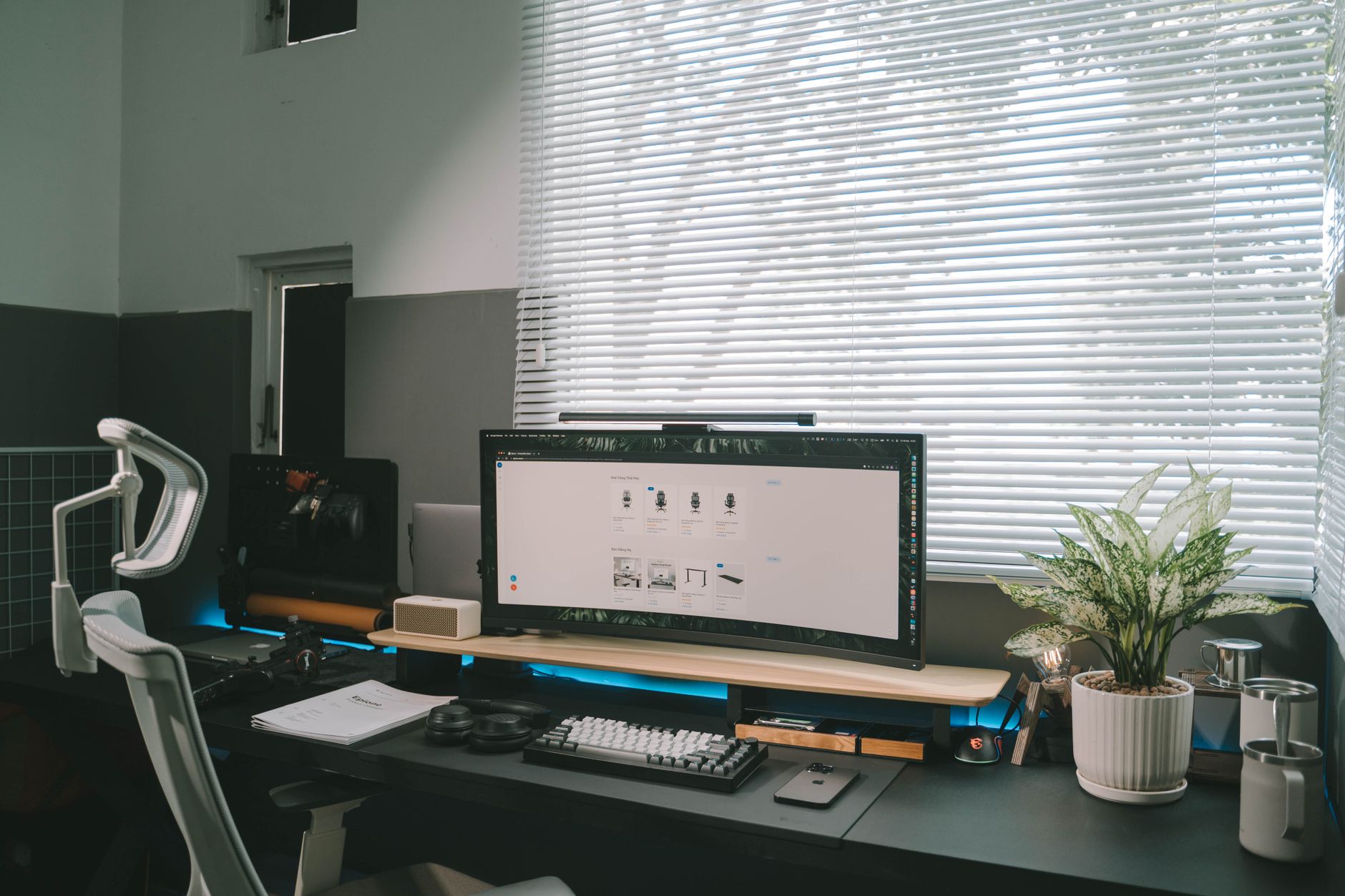
A home office is one of the few rooms where paint choice has a measurable effect on how well you actually perform. Bedrooms reward calm. Living rooms reward warmth. But a workspace needs something more precise: enough stimulation to keep the mind alert without the kind of visual noise that fragments attention. Getting that balance right starts long before you open a tin.
Why colour matters more in a workspace
Research from environmental psychology consistently shows that colour affects cognitive performance. Blue tones support analytical thinking and sustained focus. Greens reduce eye fatigue, which is why they work well in spaces with heavy screen time. Warm whites and soft off-whites keep a room bright without the harshness of a stark, cool white that can feel clinical after a few hours.
Red and orange hues increase alertness in short bursts but become fatiguing over long periods. That makes them poor choices for a full wall in a space where you're sitting for 6 to 8 hours a day. If you want a warmer tone, a single accent wall in a muted terracotta works far better than painting the whole room. For guidance on how different tones interact with your mood at home, the colour psychology behind paint choices is worth reading before you commit.
Light direction also shapes the final result. A north-facing home office in Melbourne receives cool, indirect light all day, which makes warm neutrals and soft blues feel grounded. A west-facing room floods with intense afternoon light that can push a yellow-toned white into looking orange by 3 pm. Match your colour to the orientation first, then choose the tone.
Choosing the right sheen for a home office
Sheen is underrated in a home office context. A high-gloss finish on the walls reflects light aggressively and creates glare that compounds screen fatigue. Flat and matte finishes, while popular in living rooms, are hard to clean and show marks from chairs, cables and desk equipment quickly.
Low-sheen or eggshell is the practical sweet spot. It wipes down easily, resists scuffs from chairs and filing boxes, and doesn't bounce light in ways that create hotspots on your monitor. For the ceiling, a flat white keeps the overhead surface recessive and reduces distraction. Paint the ceiling in a bright flat white regardless of your wall colour: it lifts the room without competing with the walls. Understanding how to choose the right paint finish for every room will help you make that call with confidence.
Skirting boards and architraves in a home office benefit from a semi-gloss. It holds up against vacuuming and furniture movement, and the slight contrast between the wall sheen and the trim gives the room definition without requiring a colour change.
Prep work that actually matters
Most paint failures in home offices come from rushed preparation. The walls may have cable channels patched through them, old picture hooks filled in the wrong order, or previous paint coats applied directly over glossy surfaces. None of these problems fix themselves under a fresh coat.
Start by filling every hole and crack with a flexible filler, then sand flush once dry. If any previous filling was done with a rigid filler, check for hairline cracks around the edges before painting. Spot-prime every repaired area with a water-based primer before the full coat. Skipping this step is one of the most common reasons why paint looks patchy in patches of localised repair.
Wipe down all surfaces with a damp cloth and sugar soap, especially around the desk area where hands, sleeves and equipment leave oils on the wall. Oil contamination underneath a fresh coat prevents adhesion and shows up as peeling within months. Sand any existing semi-gloss or gloss surfaces lightly before repainting to give the new coat something to grip. Clean, dull, dry: that's what a primed wall should feel like before paint goes on.
Painting the room without disrupting your setup
A home office is harder to clear than a bedroom. Monitors, printers, standing desks and shelving units all need protection or temporary relocation. Don't try to paint around your equipment. Even small paint mist from a roller can land on a keyboard, a screen or a speaker grille and cause real damage.
Move everything you can to another room. For items that can't move, wrap them in plastic sheeting and tape the edges down at floor level. Use a low-tack painter's tape on timber desks and shelving if they're staying in place. Canvas drop sheets on the floor are more effective than plastic: plastic sheets slide under foot traffic and won't absorb spills.
Cut in around the ceiling, corners and trim first with a brush, then roll the main wall areas in sections. Work from top to bottom and keep a wet edge at all times to avoid lap marks. Two coats of a quality low-sheen is always better than three coats of a cheaper product. Allow the first coat to dry fully, at least 4 hours in a ventilated Melbourne autumn, before applying the second. If you're repainting a room that's seen a lot of use, learning how to repaint a room without making a mess will save you a lot of clean-up time.
Specific colours worth considering
Dulux sells a range called Natural White, which sits at the warmer end of off-white and reads as neutral under most Melbourne light conditions. Taubmans' Soft Sage and similar muted greens perform well in home offices because they don't shift dramatically under artificial evening light, which matters if you work past sunset.
If you want a feature wall behind your monitor setup, a mid-tone dusty blue or slate pulls the eye away from the screen's backlight and reduces the contrast that causes eye fatigue. Keep it mid-tone: a colour dark enough to anchor the wall, light enough not to absorb all the natural light the room gets.
Avoid feature walls opposite a window in a small home office. The contrast between bright incoming light and a dark wall creates a visual stress your eyes keep adjusting to. The feature wall, if you use one, should be on the wall your monitor faces or behind your seated position.
Ventilation and dry time
Don't move back into the room too soon. Water-based paints off-gas for longer than they smell, and working in a freshly painted space with poor airflow can cause headaches and difficulty concentrating, the opposite of what you're trying to achieve. Open windows on both sides of the room for cross ventilation while painting and for at least 24 hours after the final coat. In cooler Melbourne months, a small fan positioned to draw air out of the room speeds the process without dropping the temperature enough to slow drying.
Avoid placing furniture back against the walls for at least 48 hours. Paint that appears dry to the touch still cures slowly behind furniture, and pushing a bookcase against a freshly painted wall within the first day leaves impressions in the film that won't recover.
Done properly, a home office repaint takes about half a day to prep and a full day to paint. The result is a room that supports the kind of sustained, low-distraction focus that most people find difficult to manufacture any other way.