
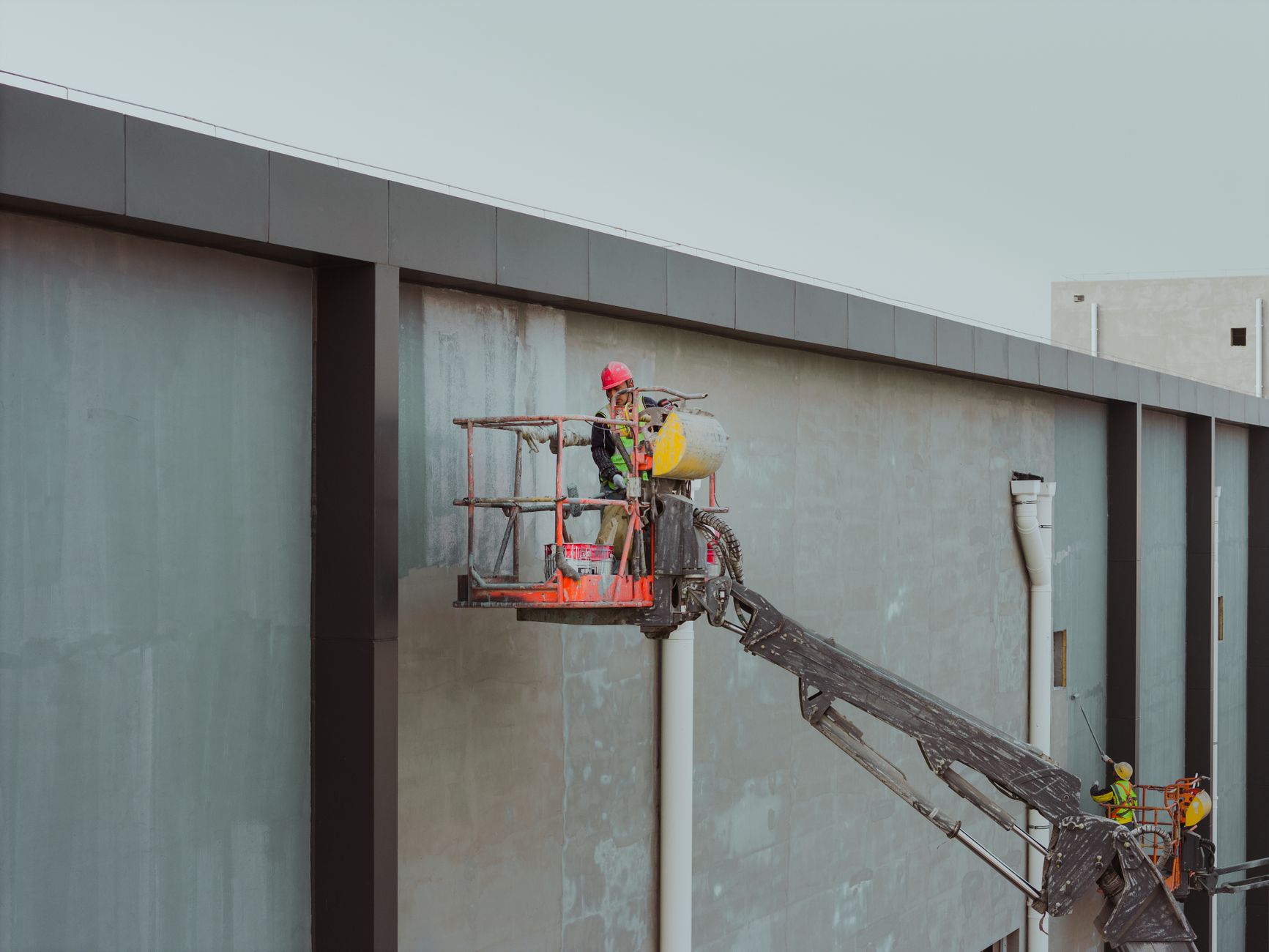
Getting three quotes for a commercial paint job is standard practice. But if your brief is thin, you're not comparing three quotes — you're comparing three sets of assumptions, and the cheapest one probably makes the most generous ones. A clear commercial painting brief puts every painter on the same footing and gives you something concrete to hold them to once work starts.
What a commercial painting brief actually is
A brief is a written document you give to painters before they quote. It doesn't need to be formal. A well-structured email or a simple PDF works fine. What matters is that it captures everything a painter needs to price the job honestly, without relying on a site visit to fill in the gaps.
Apex Painting prepares commercial quotes based on the detail clients provide upfront. The more specific that detail, the more accurately Apex Painting can price labour, materials and scheduling around your operations.
The six things every brief should cover
Skip any one of these and you introduce a variable that painters will price differently, making the quotes impossible to compare.
1. The scope of work
List every surface you want painted: interior walls, ceilings, exterior facades, car park lines, plant rooms, stairwells. Be specific about what's in and what's out. If the reception ceiling is excluded because it was done recently, say so. Painters who have to guess tend to include a contingency, and that contingency costs you money.
2. Measurements and square metreage
You don't need precise engineering drawings, but rough floor plans or room dimensions narrow the margin of error significantly. For multi-level buildings, note the number of floors and ceiling heights. High ceilings and tight access corridors both affect how long the job takes.
3. Surface condition
Painters need to know what they're working with. Describe the current condition honestly: is the paint chalking or peeling, are there water stains, are there surfaces that have never been painted? If there's old signage adhesive on a shopfront glass surround, mention it. Preparation work — filling, sanding, priming — is where commercial jobs most often blow out, and it's far easier to price if the condition is disclosed upfront. Our guide on how to paint over a previously painted surface the right way gives a useful breakdown of why prep matters so much, even if the context there is residential.
4. Product and finish specifications
If you have specific requirements — a particular paint brand, a low-VOC product for a medical tenancy, a specific sheen level for a retail fit-out — include them. If you don't have a preference, say that too. A brief that leaves finish open lets painters quote their preferred products, which makes comparing costs harder. Even a general note like "mid-sheen, washable finish on all high-traffic walls" gives painters enough to work with.
5. Access and working hours
This is the section most businesses forget, and it's often the biggest driver of cost variation. A job done after hours or over weekends costs more than a daytime job. A building that requires after-hours security access, lift bookings or permits to work at height adds coordination time. State your preferred working hours clearly, and flag any access restrictions. Painters who price for daytime access and then discover the site is only available after 6pm will come back with a variation.
If you're working through how to keep operations running while the job proceeds, our article on how to minimise business disruption during a commercial repaint covers staging strategies in detail.
6. Timeline and handover requirements
Include your target start date and any hard deadlines: a lease handover, a fit-out completion, a store reopening. If there's a practical completion date driving the schedule, say so. Painters who know the timeline can plan crew size and staging accordingly, rather than assuming a standard pace and then scrambling when the deadline becomes clear mid-job.
Optional but useful: photos and site plans
A dozen photos taken on a phone take five minutes and can cut the need for a preliminary site visit. Shoot each room or facade, close-ups of any damaged surfaces, and anything unusual: low-clearance areas, skylights that complicate scaffold access, heritage-listed brickwork that can't be painted over. Site plans don't need to be to scale. A hand-drawn sketch with rough dimensions beats nothing.
What to do with the brief once you have it
Send the same document to every painter you're approaching. Ask each one to quote against the brief as written and to flag any assumptions they've made. A painter who comes back with questions before quoting is usually more reliable than one who submits a number immediately — it means they read the brief and found a gap rather than just filling it with a guess.
When the quotes arrive, check that each one covers the same scope. A quote that's 20% lower might simply have excluded the stairwells or assumed a single coat where you need two. The brief gives you the baseline to check.
Getting your numbers in order before you brief
If you're not sure what a commercial repaint should cost before you start approaching painters, it helps to understand the market. Our commercial painting cost guide for Melbourne businesses explains how labour rates, surface prep and project scale affect pricing, so you can read quotes with context rather than just picking the lowest number on the page.
A good brief takes an hour to put together. That hour typically saves several rounds of follow-up, at least one site visit, and the kind of scope disputes that derail jobs once they're underway. Write it once, send it to everyone, and let the quotes do the rest of the work for you.