
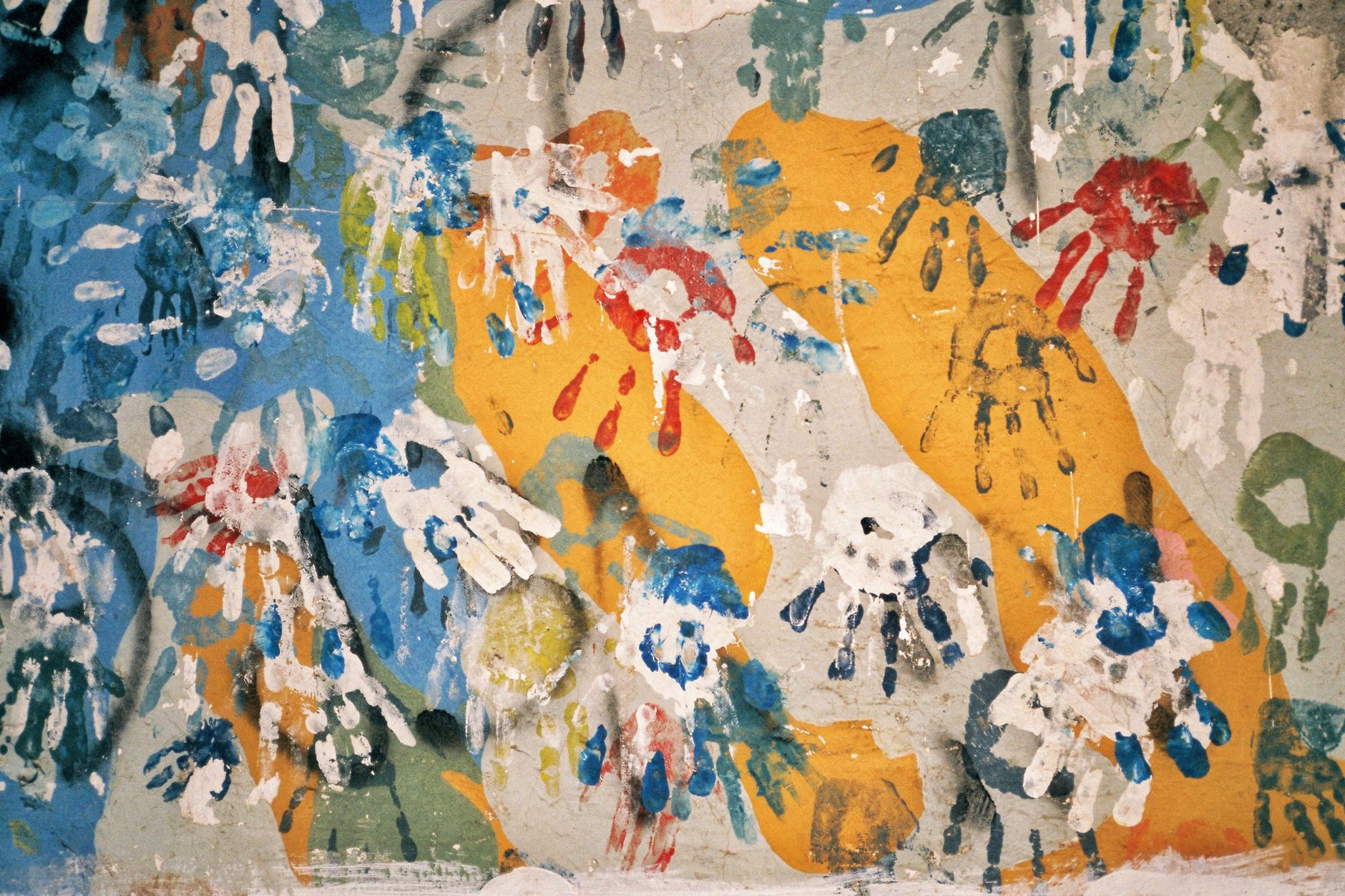
Young children treat walls the way most adults treat scrap paper. Handprints, crayon streaks, sticky residue from tape, the occasional scuff from a toy car at speed. Standard wall paint doesn't survive any of that for long. Choosing the right products from the start saves Melbourne families from repainting every 18 months and reduces the number of surfaces that need replacing altogether.
Why standard paint fails in family homes
Most interior wall paints are formulated for moderate residential use: occasional cleaning, low humidity, light traffic. A home with a toddler and a primary-school-aged child is not that environment. It's closer to a commercial space in terms of what the walls face each day.
Standard flat or matte paints absorb grime. Scrub them hard enough to remove a crayon mark and you lift the paint surface too, leaving a dull patch that catches light differently to the rest of the wall. Semi-gloss holds up better, but the wrong semi-gloss in a bedroom looks clinical and reflects every imperfection in the substrate beneath it.
The failure isn't the paint's fault. It's a mismatch between product and environment.
The sheen level question
Sheen is the single most important variable for family households. A low-sheen or low-lustre finish (sometimes labelled "washable low sheen" by Australian manufacturers) sits between flat and semi-gloss. It resists scrubbing, releases most stains with a damp cloth, and doesn't broadcast every wall imperfection the way a full gloss does.
For children's bedrooms, playrooms and hallways, a quality washable low sheen is the sensible default. Kitchens and bathrooms already carry moisture risk, so if you're also planning those rooms, the considerations overlap with painting a kitchen that handles heat, grease and daily use.
Semi-gloss works well on trims, skirting boards and architraves in high-traffic areas. These surfaces catch the most direct contact and need the hardest surface. Full gloss on walls is generally excessive in residential settings and harder to touch up invisibly.
Scrubbability ratings and what they actually mean
Australian paint manufacturers use a scrubbability rating based on how many wet scrub cycles a dried film can withstand before the surface breaks down. Class 1 (very high scrub resistance) is the target for family living spaces. Class 3 and below won't survive a determined child with a wet cloth.
Dulux and Taubmans both publish scrub-resistance ratings on their technical data sheets. Look for the rating before buying, not after. A paint labelled "washable" without a class rating is marketing. A paint rated Class 1 scrub resistance is a measurable specification.
Check the technical data sheet for the specific product, not the product range. Within a single brand family, the standard interior and the "washable" variant can differ by two full scrub-resistance classes.
Low-VOC and non-toxic formulations
Children spend more time on the floor and closer to walls than adults do. VOC (volatile organic compound) exposure matters more in their environment for that reason alone. Most major Australian water-based interior paints now carry low or zero VOC ratings, but "low" is not a universal standard across brands.
Look for products independently certified under GECA (Good Environmental Choice Australia) or carrying an Environmental Choice Australia label. These confirm third-party testing rather than manufacturer self-reporting. The GECA certification programme lists verified products and covers a range of interior paints available in Australia.
Ventilate the space for at least 48 hours after painting and keep children out during that window. Even low-VOC paints off-gas as they cure. The 48-hour threshold is a minimum, not a target.
Feature walls and bold colours in children's rooms
Colour choice in a child's room is often driven by the child, which is reasonable. Bold primary colours, deep teals and vivid yellows are all manageable if the underlying product is right. The paint specification matters more than the colour itself.
Deep bases (used to mix dark or highly saturated colours) can sometimes require a longer cure time before the surface reaches full hardness. A freshly mixed deep-base colour may feel dry to the touch within 4 hours but won't reach full scrub resistance for 7 to 14 days depending on the product and ambient conditions. Don't test the wall's resistance on day two.
If a feature wall is on the list, it's worth reading about using paint to visually resize an awkward room before committing to a very dark or saturated colour in a smaller bedroom, since the effect on perceived space is real.
Ceiling and floor considerations
Ceilings in children's rooms are often overlooked. They're the surface most likely to catch sticky ball marks, stickers and the residue of craft projects launched upward with varying degrees of success. A flat white ceiling paint won't clean. If the room is under 10 years old and the ceiling is in good condition, one coat of a moisture-resistant ceiling paint is enough. If the home is older with existing staining, prime first.
Floors are a separate category. Painted timber floors in a child's room need a two-part polyurethane or water-based floor coating, not a wall paint product. The two product types are not interchangeable. Wall paint on a floor will scuff in days.
Touch-up strategy
No paint survives childhood entirely unmarked. Buy a litre more than you need and store it properly: sealed tight, out of direct sunlight, away from temperature extremes. Label the tin with the room, colour name, colour code, sheen level and purchase date. A well-stored water-based paint stays usable for 2 to 3 years.
Touch-ups only blend invisibly when the paint, sheen and application method match exactly. Applying the right paint with a brush over a roller finish leaves a visible patch. Apply with the same tool used on the original coat. If you're unsure what was used, a light sanding of the area before touch-up helps the new coat key in better.
Apex Painting recommends documenting paint specifications at the time of the job, a habit that pays off every time a touch-up is needed and saves homeowners from colour-matching guesswork two years later.