
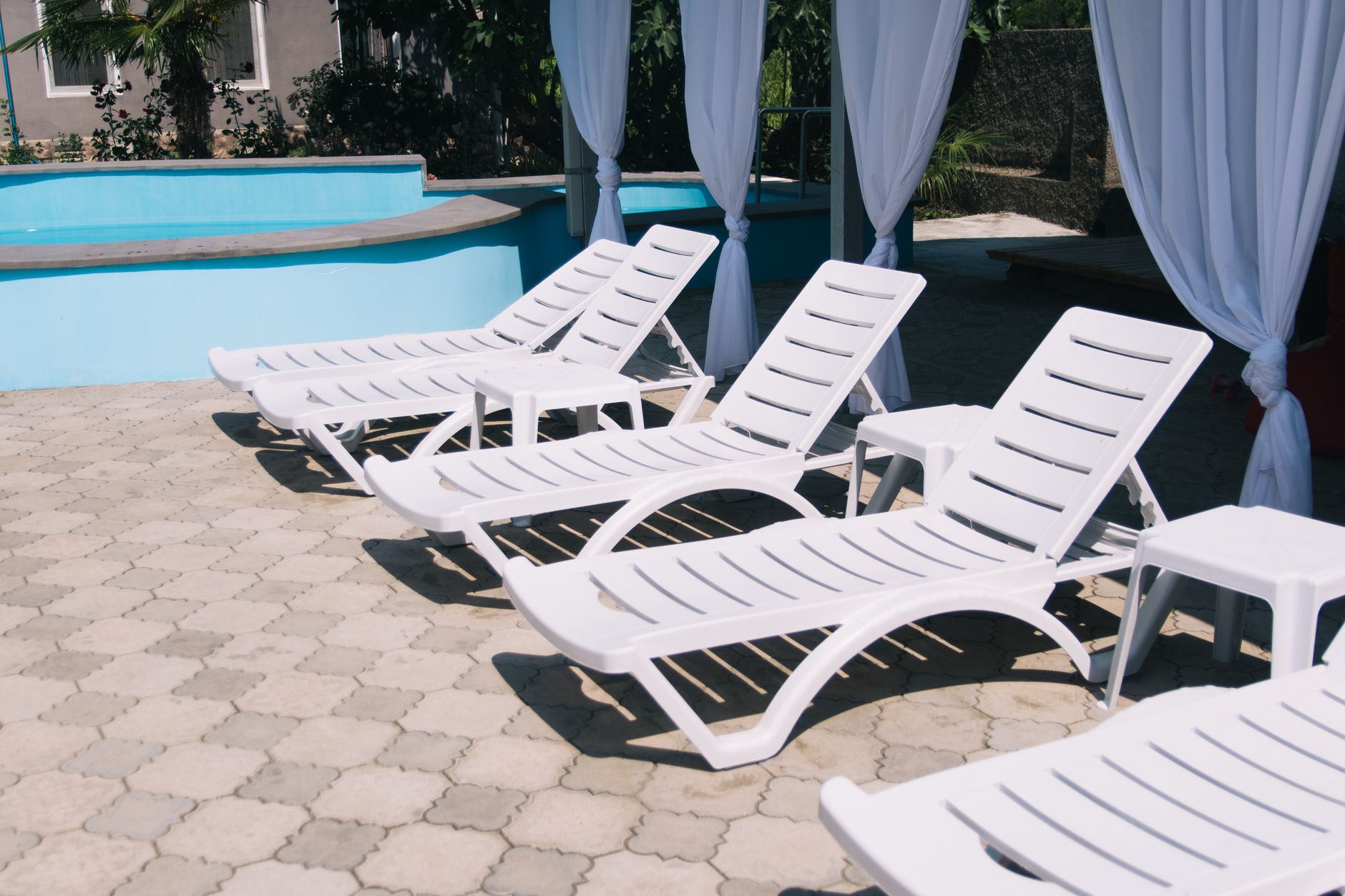
Pool and spa areas subject paint to a combination of stresses that almost no other part of a home matches: chlorine vapour, salt air (in coastal Melbourne suburbs), UV radiation, constant moisture, and the physical abrasion of wet feet on surrounding surfaces. Choosing the wrong paint here doesn't just look bad quickly. It creates slip hazards, peeling surfaces and ongoing maintenance costs that far exceed what a correct first application would have cost.
Why standard exterior paint isn't enough
Standard exterior acrylic is formulated to handle rain, sun and general weathering. It isn't designed for the chemical load a pool zone generates. Chlorine off-gassing from a heated pool or spa attacks binders in conventional paint, breaking down adhesion within a season. Salt from chlorinated or saltwater pools accelerates this further.
Surfaces that pool owners most often paint incorrectly include the pool surround (coping and paving), rendered pool fences, timber decking adjacent to the pool, and the exterior walls of any attached cabana or pool house. Each of these surfaces has a different substrate and needs a different product response.
The right products for pool surrounds and coping
Concrete and rendered coping around pools needs a two-part epoxy or a dedicated pool surround coating rather than a standard acrylic. Two-part epoxy coatings cure to a hard, chemically resistant film. Dulux and Feast Watson both produce products designed specifically for this environment, with non-slip additives that can be mixed in at the application stage.
Non-slip texture is not optional. Pool surrounds must meet Australian Standard AS 4586, which governs slip resistance for wet pedestrian surfaces. A smooth painted surface that gets wet becomes a liability. Your painter should be mixing a fine sand or polymer grit additive into the topcoat, not just brushing on a smooth film and hoping for the best.
For the pool interior itself (the wet basin), only purpose-built pool paint applies. This is either a two-part epoxy pool paint or a rubber-based chlorinated rubber coating. Neither of these crosses over with the products used on surrounding surfaces.
Fences and rendered walls near water
Pool fences and the rendered exterior walls of cabanas or pool houses sit in a high-humidity zone. They're not submerged, but they're constantly exposed to splash, condensation and reflected UV off the water surface. Rendered walls in this environment benefit from a moisture-resistant render primer and a quality exterior acrylic topcoat with a low-sheen finish that doesn't show water marks. Gloss and semi-gloss finishes look sharp initially but every splash mark and mineral deposit from pool water becomes visible.
If the pool fence is aluminium or powder-coated steel, the product choice shifts again. Metal surfaces near pools need an etch primer before any topcoat, and the topcoat itself should be a direct-to-metal (DTM) enamel with corrosion inhibitors. Skip the etch primer and you'll see the topcoat lift at the edges within twelve months.
Timber decking adjacent to a pool
Timber decks next to pools are one of the most failure-prone surfaces in any outdoor renovation. Water sits on them, chlorinated water at that, and UV hits them without the shade most deck surfaces get from overhead structures. The choice between a penetrating oil and a film-forming deck paint matters more here than anywhere else.
Film-forming deck coatings look great initially but once moisture gets under the film (and near a pool, it will), peeling is inevitable and stripping the whole deck back is the only fix. A penetrating timber oil doesn't form a surface film, so it can't peel. It does need more frequent reapplication (typically every 12 to 18 months near a pool), but the maintenance cycle is quick and the surface never needs to be stripped.
If the client wants a painted deck finish rather than a natural timber look, a two-part polyurethane deck coating applied over a properly dried and prepped substrate is the most durable option. The prep requirement is strict: the timber must be dry, clean and free of any previous coating residue. Moisture readings above 15% at application will cause early failure.
Colour choices that hold up near water
Colour fading is faster near pools. UV reflects off the water surface and hits surrounding walls and fencing at angles that accelerate pigment breakdown. Dark colours absorb more heat and are more prone to surface cracking in exposed concrete or render. Light to mid-range tones in a quality exterior acrylic with a UV-stable pigment system perform best over time.
For the interior of pool houses or cabanas, the environment is closer to a bathroom than a standard room: high humidity, temperature swings and occasional water ingress. The same logic that applies to managing paint maintenance after a bathroom renovation applies here. Moisture-resistant primers, low-sheen finishes and mould-resistant additives are worth specifying from the start.
Surface preparation: the step that determines everything
Around pools, preparation is more critical than product selection. A premium two-part epoxy applied to a damp, contaminated or poorly keyed surface will fail as fast as any cheap paint. The key steps for concrete and render surfaces are:
- Pressure washing to remove algae, mineral deposits and loose surface material.
- Allowing full dry time (72 hours minimum for concrete after washing, longer after rain).
- Acid etching concrete that has been previously sealed or is very dense, to open the surface and improve adhesion.
- Applying a bonding primer before any topcoat on porous render.
Algae growth is a persistent problem in pool zones. Any surface prep that skips a biocide wash before painting is leaving the problem in place under the new coat. A diluted bleach wash or purpose-made anti-algae solution applied before the pressure wash, then rinsed thoroughly, eliminates the biology before the paint goes on.
Maintenance expectations around a pool
No paint system around a pool lasts as long as it would on a standard exterior wall. Realistic expectations for well-specified systems are four to six years on coping and surrounds with an epoxy coating, and two to three years on timber with a penetrating oil. Planning a maintenance cycle before the first application saves money over time and keeps the surface looking sharp rather than reaching the point of total failure before action is taken. If you own an investment property with a pool, factoring this into a scheduled repaint plan makes the ongoing cost predictable rather than a surprise.
Apex Painting handles pool and spa area painting across Melbourne, from concrete coping and rendered fences to timber decks and pool house interiors. Apex Painting specifies the right product for each substrate and includes proper non-slip finishes as standard on all wet pedestrian surfaces.