
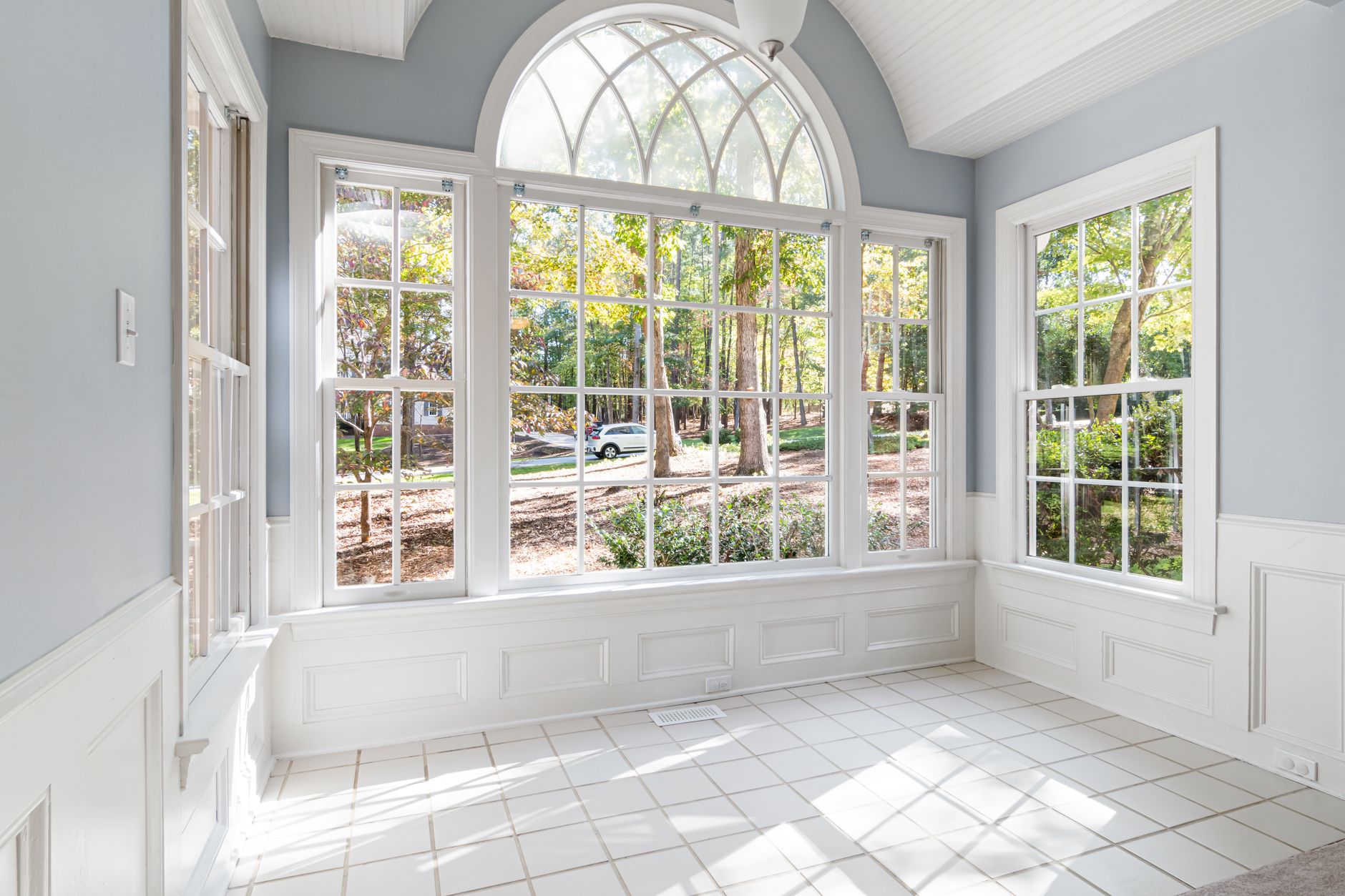
Painting a sunroom sounds straightforward until you consider what the space actually endures. Direct UV exposure for hours at a day, rapid temperature swings between morning and afternoon, and in many Melbourne homes, condensation building up overnight. Standard interior paint fails here faster than almost anywhere else in the house. Sunroom painting needs a deliberate approach: the right primer, the right product, and the right colour choices to handle the environment.
Why sunrooms are hard on paint
The core problem is thermal cycling. A sunroom's surfaces heat up fast and cool down fast, and paint expands and contracts with every cycle. Over months, that movement causes micro-cracking, then peeling. Standard water-based interior latex can handle normal room conditions, but it isn't built for surfaces that might hit 40°C on a summer afternoon before dropping 20 degrees by evening.
UV is the second issue. Glass filters some UV, but not all, and the wavelengths that penetrate are exactly the ones that degrade organic pigments. White and light colours fade unevenly. Deeper hues can chalk. Apex Painting uses paints with UV-stable pigments in sunroom projects for this reason.
Humidity matters too. Many sunrooms function as informal dining or garden rooms, meaning moisture from plants, cooking or simply rain-damp clothing gets introduced regularly. Without a paint system designed to resist moisture vapour, bubbling and mould growth follow.
Choosing the right paint for a sunroom
The best starting point is an exterior-grade paint in an interior application. That sounds counterintuitive, but exterior formulations are built specifically for UV resistance, thermal movement and moisture. Products like Dulux Weathershield carry UV-blocking agents and flexible binders that handle expansion without cracking. Using them on interior sunroom walls gives those surfaces the durability they actually need.
The finish matters as well. Gloss and semi-gloss hold up better to UV and are easier to wipe clean of the grime that accumulates in a room full of sun and airflow. If you prefer a lower sheen for aesthetic reasons, choose a satin. Flat and matte finishes are a poor choice in a sunroom: they absorb UV rather than deflecting it, and they stain easily. For more on how finish choices interact with room function, the guide on how to choose the right paint finish for every room covers the trade-offs in practical detail.
For sunroom floors, the calculus changes entirely. Concrete floors need an epoxy or polyurethane coating rather than a standard floor paint, because foot traffic combined with thermal movement destroys ordinary finishes within one season.
Preparing sunroom surfaces before you paint
Preparation is where most DIY sunroom paint jobs fail. The surfaces in a sunroom are often a mix of materials: rendered or plasterboard walls, aluminium or timber frames, concrete or tiled floors, and sometimes heritage-style pressed metal ceilings. Each needs different treatment.
Start with a thorough clean. Dust, mould spores and chalky residue from previous paint all need to come off before anything else. A sugar soap wash followed by a rinse and full drying time is the minimum. If there's visible mould, treat it with a fungicidal solution and allow it to dwell for the recommended period before rinsing.
Aluminium frames need a specific primer before topcoats. Standard primers don't bond well to non-ferrous metals, and skipping this step is the most common reason paint peels from aluminium window surrounds within 12 months. Use an etch primer or a direct-to-metal primer rated for aluminium.
Fill any cracks before priming. Sunrooms on older Melbourne homes often have hairline cracks around window frames where the frame has moved with the structure. Fill these with a flexible sealant, not a rigid filler, because they'll continue to move slightly with temperature changes.
Colour choices that work in a sunroom
Colour selection in a sunroom is partly about aesthetics and partly about heat management. Dark colours absorb more solar heat, which raises the ambient temperature of the space. In a Melbourne summer, a sunroom painted in deep charcoal or navy can become genuinely uncomfortable by midday. That doesn't mean you can't use dark colours, but use them on walls that don't receive direct sun, or on the ceiling only.
Lighter, warm-neutral tones work well because they reflect heat, keep the space cooler and hold their appearance under UV better than saturated hues. Warm whites, sandy tones and soft greens suit the botanical character that most sunrooms carry. If you want something with more depth, consider the approach outlined in the piece on how to use dark paint colours without making a room feel small: the same principles about strategic placement apply in a sun-drenched space.
Avoid crisp cool whites on sunroom ceilings. Under direct sunlight they read as harsh and clinical, and they show UV yellowing more obviously over time. A warm white with a slight cream or stone undertone ages more gracefully.
Ventilation and drying time
Sunrooms dry fast. That's both a benefit and a risk. Paint applied on a hot afternoon in a sunroom that's already at 35°C can skin over before it's properly bonded to the surface beneath, leading to a finish that looks fine on the day and blisters within weeks. Aim to paint in the morning before the room heats up, and keep windows slightly open during drying to allow solvent vapour to escape without creating a cross-draught that carries dust onto the wet surface.
Allow full cure time before replacing furniture. Most water-based paints feel dry to touch in 2 hours but reach full hardness in 2 to 4 weeks. Stacking items against a freshly painted sunroom wall in that window can leave impressions that don't disappear.
When to call a professional
A standard sunroom repaint in good condition is manageable as a DIY project if the prep work is done properly. But there are situations where professional help is worth the cost. Apex Painting handles sunroom jobs regularly across Melbourne, and the projects that benefit most from professional attention are those where the existing paint has failed badly (particularly bubbling or peeling from moisture ingress), where there are multiple substrates requiring different primers, or where the frames are heritage timber that needs careful preparation to avoid damage.
If you're unsure about your existing paint condition, it's worth getting a professional assessment before committing to a topcoat. Painting over a compromised base just locks the problem in.