
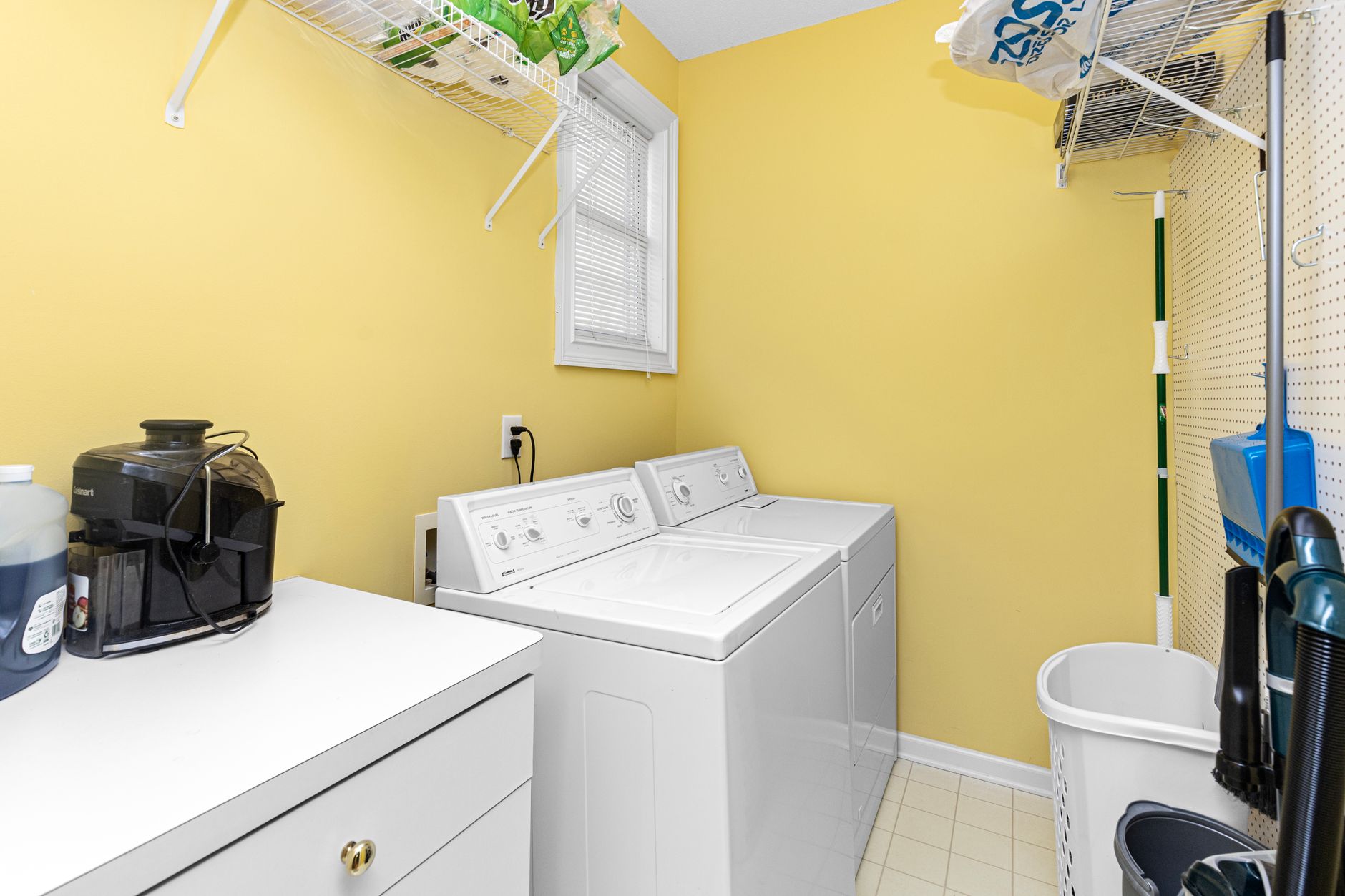
Laundry rooms take a beating that most other rooms in the home never see: steam from the dryer, splashes from the trough, detergent vapour and near-constant humidity. Paint that works beautifully in a living room will blister, peel or grow mould within months if it's the wrong choice for this environment. Apex Painting services laundry rooms across Melbourne regularly, and the same mistakes come up every time.
Why laundry rooms need a different approach
The core issue is moisture. A dryer venting indoors, even briefly, pushes warm humid air against walls and ceiling. The washing machine adds splash and condensation. Combined, those forces create a cycle of wetting and drying that standard interior paints aren't built to handle. Flaking paint around the trough and black spotting on the ceiling are almost always the result of using the wrong finish, not poor application.
Surface prep matters just as much here as it does in bathrooms. Any existing mould must be treated with a dedicated anti-fungal wash before painting starts. Scrubbing it off and painting over it doesn't work. The spores remain in the substrate and come straight back through the new coat within weeks. Let the treated surface dry fully before priming.
Choosing the right paint finish
Semi-gloss is the minimum sheen level for laundry room walls. It resists moisture absorption, wipes clean easily and doesn't hold detergent residue the way flat or eggshell finishes do. Satin is acceptable on walls in a very well-ventilated room, but semi-gloss is safer. On the ceiling, where moisture collects first, go semi-gloss without compromise.
Look for a water-based acrylic with a mould-inhibiting additive. Dulux and Taubmans both produce interior acrylics marketed specifically for wet-area use. Read the tin: "washable" is not the same as "moisture resistant." You want a product that explicitly references bathrooms, kitchens or high-humidity areas. If you're unsure which finish suits other rooms in the home at the same time, the guide to choosing the right paint finish for every room lays out the full sheen scale with room-by-room recommendations.
Priming: don't skip it
A moisture-resistant primer applied before topcoats is not optional in a laundry room. It seals the substrate, blocks any residual staining and gives the topcoat a surface it can bond to properly. On bare plasterboard or repaired areas, two coats of primer are worth the extra hour. On previously painted surfaces in good condition, one even coat is sufficient provided the surface has been cleaned, sanded lightly and is completely dry.
If the existing paint is peeling or bubbled, remove it back to a stable edge before priming. Painting over a compromised film just delays the problem by a few months.
Colour choices that work in small, poorly lit spaces
Most laundry rooms are compact and don't get much natural light. A mid-toned neutral, think warm whites, soft stone or a pale sage, keeps the space from feeling like a cupboard without creating a colour that shows every mark. Very dark colours are a practical problem here: steam and lint show up against them constantly.
If the laundry shares a wall or hallway with an adjacent room, it's worth keeping the two palettes loosely connected. Clashing colours across a narrow doorway make both spaces feel smaller. For guidance on using colour to adjust how compact rooms read visually, the article on using paint to visually resize an awkward room covers the key techniques without requiring structural changes.
Practical application tips
Ventilation during application is critical. Open a window and use a fan pointing outward. This matters for two reasons: solvent fumes build up quickly in small rooms, and the paint needs air movement to cure properly rather than just dry on the surface.
Work ceiling first, then walls, then any joinery. In a laundry, the trough surround and window sill get the most direct splash contact, so give them an extra coat. Three thin coats outperform two heavy ones every time. Heavy coats sag in corners, take longer to cure and are more vulnerable to peeling under humidity before they've fully hardened.
Allow the full cure time before running the washing machine or dryer. Most water-based acrylics are touch-dry in two hours but don't reach full hardness for 7 to 14 days. Pushing steam into a freshly painted room before the film has cured is one of the fastest ways to ruin the job.
When to call a professional
If the laundry has persistent mould issues, a recurring damp smell, or plasterboard that feels soft or spongy to the touch, painting is the last step, not the first. The substrate problem needs resolving before any paint will hold. Apex Painting offers surface assessments across Melbourne and can identify whether a laundry room issue is a painting problem or a ventilation or waterproofing problem before any work begins.
A well-prepared, correctly finished laundry room holds its paint for five or more years with minimal maintenance. Get the primer and topcoat right, allow full cure time, and the finish will handle the daily humidity load without complaint.